Up next in 10



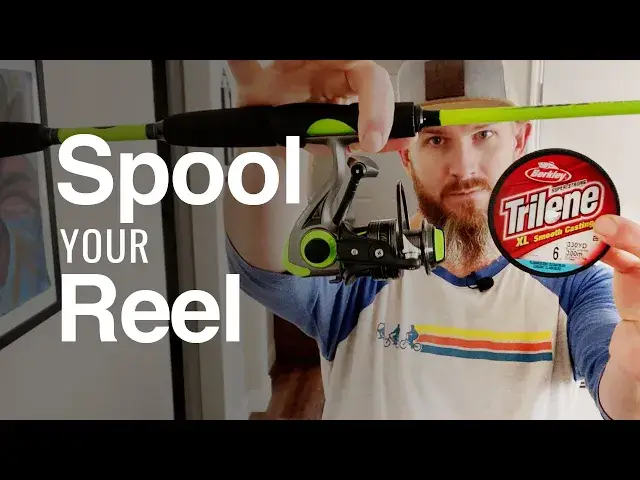
This video is about how to spool a fishing reel with new line. If you want to spool up a new fishing reel, or you have old fishing line to replace, here's a quick and easy way to do it at home without any special equipment – even if you're by yourself.
In this video:
0:00 - What you need to spool a new reel
1:03 - Feed the line through the eyelets
3:16 - Loop the line on the reel
4:39 - Clamp line to countertop
5:44 - Reel up the new line
Brought to you by LakeHub. We are sharing the joy of lake life! Learn more at https://LakeHub.com
Show More Show Less View Video Transcript
0:00
What's up everybody, it's Simon from Leica. Today we are spooling up a brand new reel
0:05
with some fresh line. I'm going to show you how to do it by yourself even if you
0:10
don't have a reel spooler. Here's everything you need. Of course you need your new reel
0:16
you need some line, and one of these bad boys. That's right, a number two pencil. That's it
0:27
That is if you have some extra hands. If you have a helper because they're going to put this on the
0:33
pencil and hold it and kind of push in a little bit, give it some friction. That's all you really
0:39
need. It's all you really need. If you're by yourself I'm going to show you how to do it with a couple clamps. I also have a cutting apparatus. It could be a pocket knife or anything
0:48
You just need a snip of line when you're all done. That's it. As far as clamps go, any style
0:57
I'm going to put them on the edge of the counter. I'll show you how to do that in a minute. First
1:04
we're going to start by feeding this through our eyelets. I'm going with six pound test here. This
1:13
is actually a micro light rod. It's kind of a full-size micro light. It's about six feet and
1:19
it's a full-size reel. It's a full-size reel but it's a light action and it's a light rod. We're
1:29
going to do six pounds kind of an all-purpose for what we're going to be using this rod for
1:34
So we'll start off getting a length here and feeding it through the eyelets from the top
1:44
Now you don't have to do this. You can go straight from your line, your brand new line
1:53
straight onto the reel. But I like to put it through the eyelets and there's a reason why
2:00
Because I feel like the memory in the line doesn't get carried as... I feel like the memory
2:11
in the line, which is from sitting wound up on the shelf, especially monofilament line
2:17
which is kind of your basic fishing line, that memory is going to get transferred a little more
2:25
directly unless you run it through the rod. So I like to put it through the eyelets because how
2:33
your reel is going to be reeling it up on the line through the eyelets is how it's going to
2:37
be happening when you're fishing. So the best thing to do if you have the option is once you're
2:47
spooled up, if you have a boat, you can let all your line out and troll really slowly and all that
2:56
memory, all the twisting and everything, all the kind of looping, it'll all work itself out and
3:03
straighten itself out in your wake. So that's really the best way to get rid of the memory in
3:07
monofilament line. But if you don't have that option when you're spooling up, I just recommend
3:14
using the whole length of the rod if you can. So now that we have it fed through the eyelets, I'm
3:19
just going to do a lasso right here on the end. I'm going to tie a lasso. So just a regular old-fashioned
3:28
overhand knot, something basic. All you're really trying to do is just put enough tension on there
3:36
to get the spooling started. Got a little too much tag in there. I'm going to cut that off
3:42
Just want a little bit. A little bit's okay. All right, so now we're going to loop this over the end, over the reel
3:58
with the bail open, and just tight enough to get it started. All right, so now what I'm going to do
4:07
I'm going to hold this line tight with one hand. This is where it gets tricky. You kind of want to
4:17
either want to hold it tight enough or just loosen just a little bit. All you're trying to do is get
4:22
it started. Okay, I got it started. So sometimes you might need to like hold that lasso on there
4:28
while you start reeling a little bit. But now that we got it started, now I can kind of back up and get a
4:36
little more on there. There we go. I feel good about that. And now we can rig up our contraption. So what I
4:48
want to do is I'm going to step back and I'll be reeling it from this side. And so I want it to be
4:56
coming up from the backside here, just to kind of be more of a natural flow on the reel. Put my magic
5:05
pencil through here, open up my clamp. Clamp's a little overkill in this situation, but it'll work
5:19
Clamp to the counter there. I'm going to use my other clamp to put a little bit of pressure on it
5:30
Let's see if I can get this through here. Oh yeah, there we go. So there's a little, just enough friction
5:35
You just want enough friction so it's not just free spooling and you don't want the line to be loose. You
5:40
want the line to be tight while it's going on to your reel. And if you do that, you'll be fine. So I've got a
5:47
little tingle here. I'm going to back it up. And I like to hold it kind of close to the eyelet. So I've got a
5:59
nice tight, almost like a guitar string. I mean, I'm really tight here. The tighter that it goes on to the reel
6:06
the less likely you're going to have, you know, kind of a rat's nest or, or any sort of kind of things going
6:14
haywire when you first get to use it. Because you can see there's a lot of loops. There's a lot of memory going
6:18
on in this line here. So we're going to get started. I'm going to get started slowly. Kind of work out these
6:27
first. See our reel, our spool starting to spin there. I just kind of plant it into my hip, hold it with my hand
6:38
And now we can go nuts. I don't want to, I don't want to spool it all the way to the top. That'd be too full, but you want plenty of line
6:55
out there. So if you hook something big and you need to work it, it's got plenty of line to work with
7:09
We're almost there. A little over halfway there. Stop and check here. So it's going on well. It's going on good
7:18
I don't see any problems, any kinks or any weird little loops or anything like that. So we're looking good
7:23
We'll get back to it. They make a, they make a device that, you know, holds the spool and everything like that. It makes it, you can actually
7:38
mount your reel onto it and just go straight on, on there. And those are handy, but if I can do it with stuff I already
7:46
have around the house, I'm going to do that. That's more my speed
7:54
All righty. We are almost, it's almost full here. I don't, you know, again, I don't want it to be overly full because you're more likely to
8:10
have kind of a rat's nest or some kind of loop or tangle or something
8:16
And this one is from my son. So I think I'm going to call it right there
8:23
So we're just going to snip it off. If you're heading out, this would be a good opportunity to tie a lure on
8:32
For your first couple casts, I would recommend some kind of swivel, you know, like a snap swivel, swivel snap, whatever you
8:39
call them, so that whatever action in the lure isn't going to, you know, make your line tangled more or, you know, curled up
8:50
more or anything, twisted more or anything like that. So, you know, the first couple casts on a fresh spool, you'll want to
9:00
what I like to do is put a really, really heavy lure on there with a swivel and just chunk it as far as you can, get as much
9:07
line in the water as you can. And then as you reel it in, that swivel, the line will kind of twist the swivel and it tends to
9:16
just sit back on here a little bit better than fresh off the spool, I think. All right, then there's a little keeper on here
9:25
Hopefully you can see this little gray nugget. You just get some big old fat fingers here. Come on, guy. You just loop it
9:39
around the bottom like that. Flip the bail back down. And now this one's ready for the rack. It's ready to head out to the lake
9:48
have some fun. That's how you spool it up at home without any fancy tools or accessories. I'm Simon from Leico. Get out on the
9:55
water. We'll catch you next time
#Hobbies & Leisure
#Fishing
#Sports